Built wall, called decoration
You get hit.
The outsider's error.
File 03 · everywhere
For any constraint, ask: if I break this, does it fail against reality, or only against consensus?
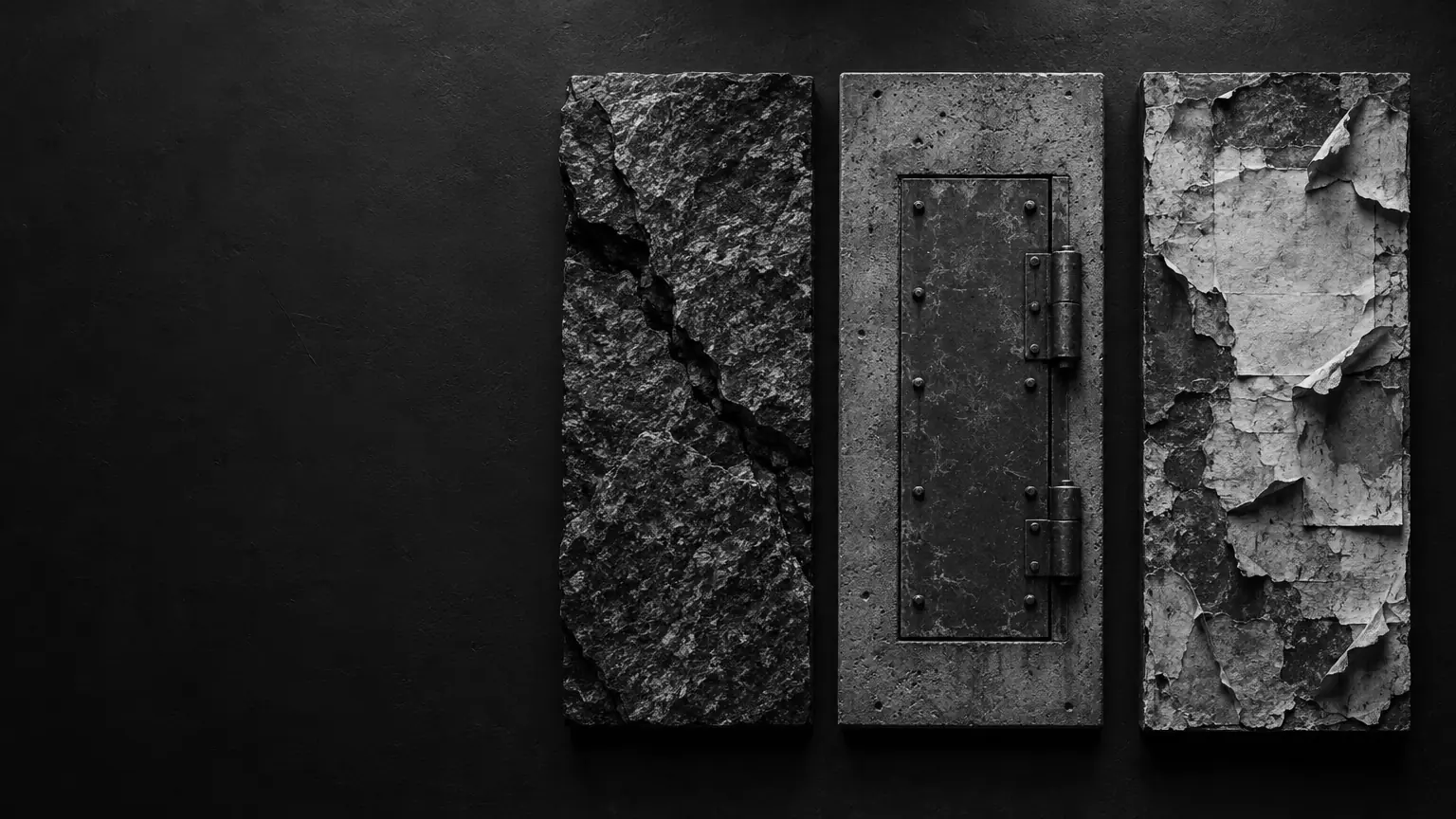
Three kinds of wall: bedrock, built, decoration. Most real-world work lives in the built layer.
For any constraint, ask: if I break this, does it fail against reality, or only against consensus?
It fails against reality. Conform to it.
Man-made, but real right now: laws, platforms, gatekeepers. Work through it or around it. Never pretend it isn't there.
It fails only against habit. Drop it.
Most real-world work lives in the built layer.
Two ways to get it wrong
Both ways of getting it wrong are costly.
The outsider's error.
The insider's error.

Bedrock is contestable too
What gets used as bedrock, even in physics, is partly what consensus has labeled fundamental. If reality punishes the violation every time, it's bedrock whatever the textbook says.
You often can't tell enforcement from habit without testing it, and some tests are one-way. Contest a label on paper before you contest it with your body or your business.
Same sort, opposite verb
The durability rule
A move that depends on nobody checking has a shelf life. One that survives scrutiny keeps paying.
Deleting is cheap to start and expensive to undo. It breaks when you delete something you didn't know was holding something up.
What it allows
Instead of asking "how many rules will you break?", ask "which rules are fake?" Dropping the fake ones costs nothing; breaking the real ones costs a lot.
Inside translate, the same sort reads the gatekeeper: which of their rules are hard checkboxes, and which are discretion.